
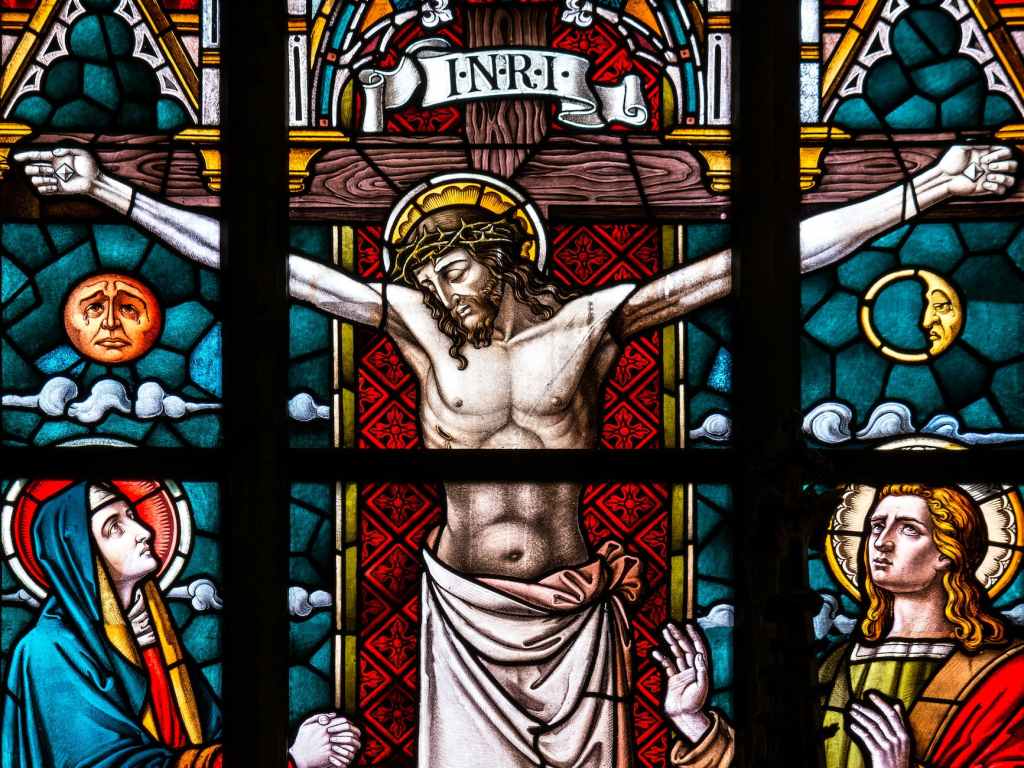
There is little consensus amongst biblical and systematic theologians surrounding the concept of the imago Dei: humanity being made in “God’s image”. This lack of consensus is exacerbated by the difference in methodological approaches adopted by biblical and systematic theologians: the former are accused of being too narrowly focused on Genesis 1:26–27 and ignoring the implications of the rest of Scripture, particularly the creation narrative of Genesis 1–3, while the latter are often viewed as treating the immediate context of Genesis 1:26–27 as relatively unimportant for determining the meaning of those verses. The tension concerning this alleged decontextualization is captured in Snaith’s statement: “Many ‘orthodox’ theologians through the centuries have lifted the phrase ‘the image of God’ right out of its context, and … have made the word mean just what they choose it to mean” (Snaith 1975, 24). There are numerous interpretations of the imago Dei, including the structural, relational, and functional models, and space prohibits a detailed discussion of these views here. Instead, we shall presuppose the relational and functional models, and argue that the true image (eikön) of God finds its greatest fulfilment in the person of Jesus Christ, as outlined in 2 Corinthians 4:4-6 and Colossians 1:15-20.
The New Testament writers set forth a Christocentric understanding of the image of God which radically advanced the Old Testament concept of the imago Dei. Thus for these writers, Jesus Christ was the ultimate fulfillment of the image of God. In the New Testament, Jesus is described as being the “glory of God” (Hebrews 1:3, John 1:14, John 14:8–9), a status which the Hebrew scriptures conferred to humanity as a whole (c.f. Psalm 8:5 wherein the author declares that God has crowned humankind with “glory and honour”). Yet when this theme is developed in the New Testament, the emphasis shifts from humanity in general to the figure of Jesus in particular. Indeed, the concept of Jesus as the imago Dei is further outlined in numerous texts throughout the New Testament. The Septuagint translators rendered the Hebrew term tselem found in Genesis 1:26–27 as the Greek term eikön. The imago Dei references in the New Testament set forward Jesus as the one who manifests the reality of God (Fig. 2).
This is particularly evident in the Pauline corpus: Paul views Jesus as the one who pre-existed in God’s form (morphe in Philippians 2:6) and whose incarnation represented the ultimate image of God (2 Corinthians 4:4; Colossians 1:15; cf. John 1:1, John 1:14, John 1:18; 14:9; Hebrews 1:3). Indeed, it is primarily the apostle Paul who develops the New Testament theology which articulates Jesus Christ as the image of God. In the Pauline literature the term “image” (eikön) had a range of meanings embracing “representation, reflection, likeness” (Kleinknecht 1967, 2.388–389) and which Plato had used in that sense for the cosmos as the visible “image” of God (Timaeus 92c). The concept of eikön was able to bridge the gulf between the Creator and created, and was an attempt to put into words the self-revelation of the invisible God.
We shall now briefly examine two key texts within the Pauline corpus: 2 Corinthians 4:4-6 and Colossians 1:15-20. In 2 Corinthians 4, Paul links Christ as the imago Dei with the glory-Christology evident elsewhere in the New Testament. He emphasizes Christ’s glory as the image of God (2 Corinthians 4:4) and proclaims that Christ, as the imago Dei, radiates the very glory of God (2 Corinthians 4:6). The text includes an implicit reference to the creation of humanity in the divine image narrated in Genesis 1:26–27, which is now understood through the paradigm of Christ as the Second Adam, a theme Paul develops more explicitly in Romans 5:12–21.
Colossians 1:15–20 describes Christ’s preeminence over the created order, and central to this concept is the statement at the beginning of the hymn: Christ is “the image of the invisible God” (Colossians 1:15). The essence of Christ as the imago Dei is rooted in the repetition of prötotokos, which brings together the themes of the two phrases: the “firstborn of all creation” (v. 15 NRSV) and the “firstborn from the dead” (v. 18 NRSV). The second instance of prötotokos in this hymn conveys Christ as the “Second Adam”. This parallels the Pauline argument in Romans 5:12–21 in which the life and actions of the “one man” (Christ) supersede and atone for the life and actions of the original “one man” (Adam). This aspect of Pauline theology is therefore heavily dependent upon the concept of the image of God being equally present in both Adam and Christ. Thus the theme of Christ as the primary “image of God” can be traced throughout both the Old and New Testaments. This concept begins in the Genesis account of humanity being created the imago Dei and is fulfilled through the birth, death, and resurrection of Christ as the “true” image of God. It ultimately climaxes in the eschatological new creation (Revelation 21:1–8) which Christ himself will usher in.
When the New Testament refers to the new creation, it is speaking of the restoration of the image (cf. 1 Cor. 15:49). Christ is held to be the pattern of redeemed humanity, and the principle emphasis in Pauline anthropology is the restoration of the image (cf. 2 Corinthians 3:18; Romans 8:29; Ephesians 4:24; and Colossians 3:10). In Paul’s view, those who believe in Christ are renewed in the image (eikön) of God. They are therefore expected to live as renewed people, with a new standard of ethical behavior (2 Corinthians 3:18; Ephesians 4:22–24; and Colossians 3:9–10), in order to reflect the “image” of Jesus, who is the image of God himself (1 Corinthians 15:49; Ephesians 4:13; and Philippians 3:21). Thus a key motif in New Testament theology is that of regeneration and sanctification serving to renew the believer into the restored image of his Creator (Feinberg 1972, 235). In redemption, the divine image is restored and perfected in humanity.
==========================================================================
The above excerpt is taken, with the author’s permission, from the book chapter, M. Shaw, (2021), “The Concept of the Image in the Old and New Testaments”, in K. Purgar, (Oct 2021), The Palgrave Handbook of Image Studies. pp23-36. The full chapter can be accessed here.



 Theology For Life
Leave a comment