
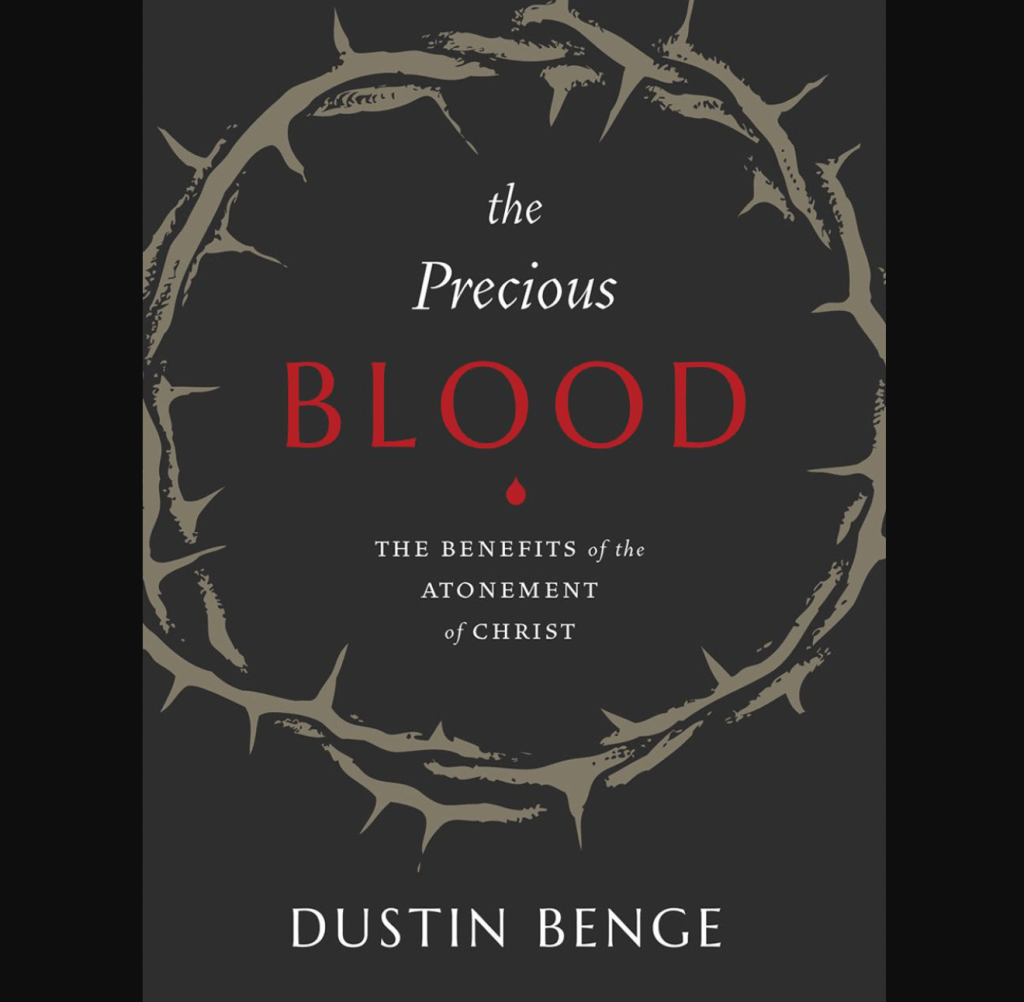
There is a great temptation, even within the Church, to gloss over the significance of the cross, sentimentalise it, or simply become overly familiar with it. This is why Dustin Benge’s The Precious Blood (2022) is so helpful – offering us a short yet edifying meditation on the atoning work of Christ. In this book, Benge calls us back to the foundation of the Christian faith, the blood of Jesus, as the fountain of every spiritual blessing.
At the heart of the book is a careful exploration of what might be called the “classic” benefits that flow from the cross: redemption (chapter 1), propitiation (chapter 2), access to God (chapter 5) and justification (chapter 6). These are well-worn paths in Christian theology, yet Benge pursues them with faithfulness, clarity, and fresh pastoral insight. His handling of justification in particular is a model of clarity. His view is ultimately rooted in a Reformed understanding of justification as outlined in Paul’s epistles, and he regularly returns to the pastoral heart of the doctrine: that sinners are declared righteous, not by works, but by the blood of Christ [1]. For readers familiar with these truths, Benge offers a valuable reminder of their enduring power and comfort. For newer believers, this will be an accessible and stimulating introduction to the theological riches that spring from the cross.
Whilst the essentials are covered well, one of the book’s biggest strengths is its treatment of benefits flowing from the cross of Christ which perhaps receive less attention, namely sanctification (chapter 7) and glorification (chapter 8). Benge describes how they are fruits, not merely of the Holy Spirit’s ongoing work, but as a direct consequence of the cross. These themes are sometimes neglected in treatments of the atonement, yet Benge convincingly demonstrates how they are linked to Christ’s sacrificial death.
For example, he states:
“Jesus Christ secures our sanctification both positionally and progressively. The writer of Hebrews reminds us that our positional sanctification is only made possible through Christ’s blood (Hebrews 13:12). Through his finished work on the cross and union with him, Christ positionally sets us before his Father as perfectly holy. But he also progressively sanctifies us by setting before us the standard and example toward which we should strive.” [2]
Drawing deeply on the book of Hebrews (especially chapters 10-12), Benge presents sanctification not merely as a moral imperative to become more like Christ, but as a blood-bought privilege for the believer. Christ’s blood not only cleanses the conscience (Heb. 9:14) but also consecrates the believer to a life of holiness (Heb. 10:10). The chapter on glorification, likewise, demonstrates that the cross is not the end but rather the beginning of a cosmic renewal that culminates in the believer’s final transformation [3]. Here, Benge is at his pastoral best: helping the reader grasp the totality of what Christ has accomplished (past, present, and future) and grounding our sanctification not in guilt or striving, but in the finished work of Jesus.
The book is well-structured and clearly written. Each chapter flows logically, building a cumulative picture of the blood of Christ as not only necessary but precious and praiseworthy. There is a conscious doxological tone throughout. This is theology meant to lead to worship, and on that measure, The Precious Blood succeeds admirably.
Benge is a clear, crisp writer who doesn’t waste words. The fact that he has written a book of only 102 pages on such a complex and rich topic, without it seeming overly simplistic, is an achievement in itself. In certain contemporary ‘Christian’ movements, there is a temptation to move on from the cross, yet Benge invites us to mediate again on the wonderful sacrifice of the Lord Jesus, and to realise afresh the immeasurable benefits that flow from his blood. The Precious Blood is an excellent resource for personal devotions or small group study. For those in pastoral ministry, this book would also be a great companion to preparation for a Good Friday service, or a refresher course on the doctrine of atonement.
References
[1] Benge, Dustin. The Precious Blood. H&E Publishing. 2022. pp.52-57.
[2] Ibid, p.63.
[3] Ibid, p.69, 71.



 Theology For Life
Leave a comment