

The relationship between human responsibility and God’s sovereignty in salvation is a source of constant debate among those who describe themselves, in some sense, as being somewhere on the Arminian-Calvinist spectrum. At some stage, I hope to write at greater length on this topic. But in the meantime, I thought it might be helpful to collect some notes on this issue (at least for my own benefit, if not for others). A few years ago I came across this section in J.I Packer’s masterful ‘Evangelism and the Sovereignty of God’ [1], and thought it would serve as a good starting point for Christians to engage in this important debate:
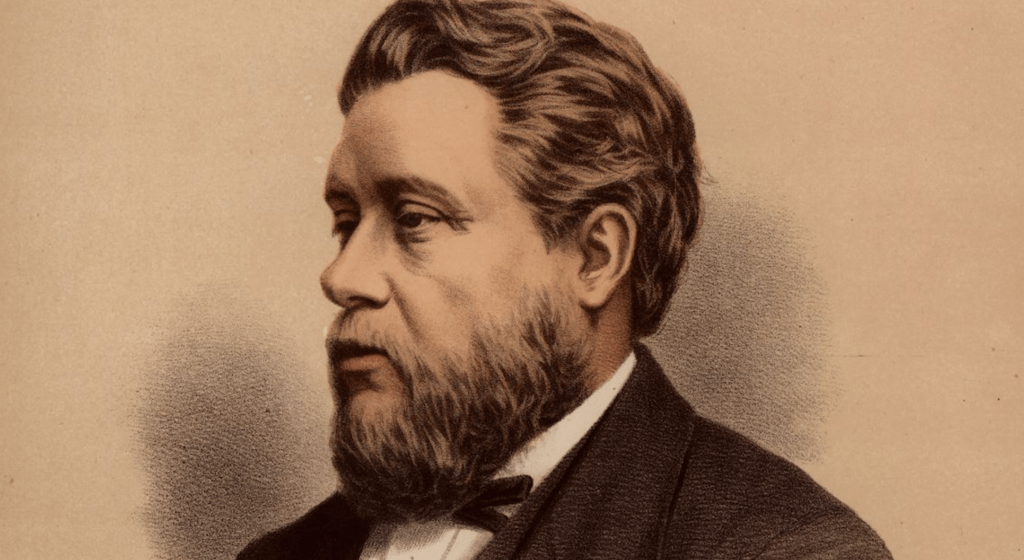
“You give God all the glory for all that your salvation involved, and you know that it would be blasphemy if you refused to thank him for bringing you to faith. Thus, in the way that you think of your conversion and give thanks for your conversion, you acknowledge the sovereignty of divine grace. And every other Christian in the world does the same. It is instructive in this connection to ponder Charles Simeon’s account of his conversation with John Wesley on December 10, 1784 (the date is given in Wesley’s journal):
“Sir, I understand that you are called an Arminian; and I have been sometimes called a Calvinist; and therefore I suppose we are to draw daggers. But before I consent to begin the combat, with your permission I will ask you a few questions. . . Pray, Sir, do you feel yourself a depraved creature, so depraved that you would never have thought of turning to God, if God had not first put it into your heart?”
“Yes,” says the veteran, “I do indeed.”
“And do you utterly despair of recommending yourself to God by anything you can do; and look for salvation solely through the blood and righteousness of Christ?”
“Yes, solely through Christ.”
“But, Sir, supposing you were at first saved by Christ, are you not somehow or other to save yourself afterwards by your own works?”
“No, I must be saved by Christ from first to last.”
“Allowing, then, that you were first turned by the grace of God, are you not in some way or other to keep yourself by your own power?”
“No.”
“What, then, are you to be upheld every hour and every moment by God, as much as an infant in its mother’s arms?”
“Yes, altogether.”
“And is all your hope in the grace and mercy of God to preserve you unto his heavenly kingdom?”
“Yes, I have no hope but in him.”
“Then, Sir, with your leave I will put up my dagger again; for this is all my Calvinism; this is my election, my justification by faith, my final perseverance: it is in substance all that I hold, and as I hold it; and therefore, if you please, instead of searching out terms and phrases to be a ground of contention between us, we will cordially unite in those things wherein we agree.”[2]
References
[1] J.I. Packer, Evangelism and the Sovereignty of God, Ch 1: Divine Sovereignty. London: IVP. 2020.
[2] Charles Simeon, Horae Homileticae, Preface: i.xvii-xviii.


 Theology For Life
Leave a comment