
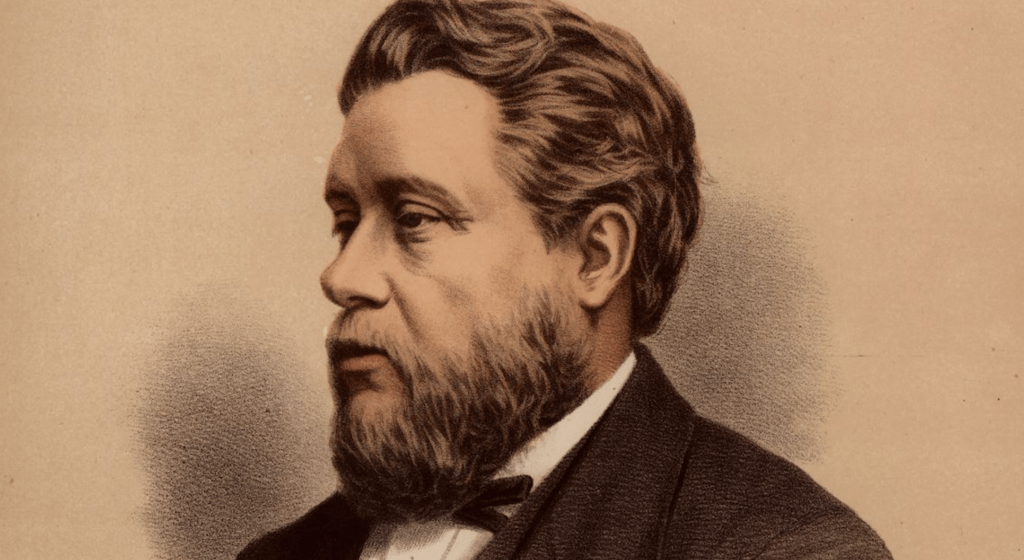
Review of Leland Brown, “An All-Out Ministry: Strain and Suffering in Spurgeon’s Pastoral Theology,” Themelios 49.2 (2024): 361–73.
Charles Haddon Spurgeon has long captivated scholars of Victorian evangelicalism, generating extensive literature on his preaching ability, theological convictions, and suffering. Yet as Leland Brown observes in this carefully argued article, whilst Spurgeon’s afflictions and pastoral ministry have been extensively explored, they have typically been treated as parallel rather than interconnected phenomena. Brown’s central contribution lies in demonstrating that for Spurgeon himself, suffering and ministry were not merely coincidental but theologically inseparable – bound together in what he terms an ‘all-out ministry’ that understood pastoral affliction as both necessary and spiritually productive. Brown brings to this article both historical sensitivity and systematic theological interest. His thesis is that Spurgeon articulated a vision of pastoral ministry in which suffering was not an unfortunate accompaniment to faithful service but an essential component of it. As Brown argues, Spurgeon believed that pastors must suffer because of their distinctive relationship with Christ as conduits of divine grace, and because such suffering produces humility, experiential knowledge of gospel truths, and sympathetic identification with suffering congregants.
Methodologically, Brown focuses primarily on Spurgeon’s addresses to fellow ministers at his annual Pastors’ Conference and selected passages from Lectures to My Students. This is a judicious choice, as these sources reveal Spurgeon’s most direct and sustained reflections on the nature of pastoral ministry itself, rather than simply allowing us to infer his pastoral theology from biographical details or his sermons. Brown situates his argument within existing Spurgeon scholarship, engaging constructively with Peter Morden’s work on Spurgeon’s theology of suffering, Tom Nettles’ magisterial biography, and Geoffrey Chang’s recent emphasis on Spurgeon as pastor rather than merely preacher. In doing so, he identifies a genuine lacuna: whilst scholars have examined how Spurgeon’s sufferings shaped his ministry and how he theologised about suffering generally, they have not adequately explored his explicit statements about pastoral identity and its intrinsic connection to suffering.
The article’s first major section establishes Spurgeon’s vision of ministry as necessarily straining. Brown documents Spurgeon’s remarkably intense exhortations to ministers: to give their ‘all’, to consider early death from overwork as glory to God, to view ease in ministry as evidence of false calling. The evidence Brown marshals here is compelling and, at points, startling. Spurgeon’s declaration that he would ‘rejoice to break down’ fifty constitutions in Christ’s service, or his assertion that ministers should be ‘living sacrifices’ rather than ‘specimens of fine preservation’, reveals a vision of pastoral vocation that many contemporary readers will find simultaneously inspiring and troubling. Brown helpfully contextualises these statements by noting Spurgeon’s own practice of strategic rest (particularly his annual trips to Menton) and by observing that such views were not unique to Spurgeon but reflected broader nineteenth-century evangelical attitudes towards ministerial labour, as evidenced by similar sentiments in Adam Clarke and Charles Bridges.
Brown’s second major section explores the theological rationale for this ‘all-out ministry’, and here the article makes its most original contribution. He argues persuasively that Spurgeon viewed pastors as instrumental – as conduits through whom God’s grace and power flowed to others. The image of God’s ‘infinite deity’ riding in the ‘frail chariot’ of the minister, thereby straining the ‘axle’, is both vivid and theologically suggestive. Brown is careful to distinguish this instrumental view from sacerdotalism, noting Spurgeon’s consistent opposition to priestly conceptions of ministry. Yet the language Spurgeon employs – of ministers being ‘filled with affliction to the brim’ so that their suffering might be transformed into spiritual wine for God’s people, or of pastors ‘filling up’ what remains of Christ’s sufferings for his body – does indeed suggest a robust theology of pastoral representation that merits the careful attention Brown gives it.
The article’s analysis of the benefits Spurgeon saw in ministerial suffering is equally illuminating. Brown demonstrates that for Spurgeon, affliction was not merely pedagogically useful but practically essential: it drove pastors to experiential knowledge of gospel realities, preserved them from pride in seasons of success, and—most strikingly—equipped them with sympathetic understanding of their people’s trials. The anecdote of Spurgeon’s deliverance of a suicidal man through preaching born of his own ‘dungeon’ experience exemplifies this vicarious dimension of pastoral suffering. Brown rightly identifies this as reflecting an ‘incarnational’ understanding of pastoral ministry, in which ministers must in some sense embody the sufferings of both Christ and his people.
The article exhibits several notable strengths. First, Brown demonstrates admirable exegetical care in handling Spurgeon’s rhetoric, distinguishing between hyperbolic ministerial exhortation and considered theological reflection. Second, his situating of Spurgeon within broader nineteenth-century pastoral theology prevents the reader from viewing Spurgeon’s intensity as merely idiosyncratic. Third, Brown’s concluding application—that contemporary pastors might retrieve Spurgeon not as a model for workload but as a resource for interpreting ministerial trials—is pastorally wise and historically responsible. He avoids both hagiography and dismissiveness, instead offering a nuanced reading that honours Spurgeon’s context whilst discerning transferable principles.
Nevertheless, several avenues for further development suggest themselves. First, whilst Brown briefly acknowledges Paul’s descriptions of ministry as containing ‘parallel implications’ to Spurgeon’s instrumental view, a more sustained engagement with the biblical-theological foundations of Spurgeon’s pastoral theology would strengthen the argument. How exactly did Spurgeon exegete texts like Colossians 1:24 or 2 Corinthians 4:7–12? What hermeneutical moves allowed him to apply these Pauline descriptions to all pastoral ministry? A deeper exploration of Spurgeon’s biblical interpretation here would illuminate whether his theology of ministerial suffering represents a legitimate development of apostolic teaching or a contextually shaped over-reading.
Second, Brown’s treatment of the nineteenth-century context, whilst valuable, could be expanded. He notes that views about ministerial overwork had ‘broad approbation’ across various theological streams, but the article would benefit from more sustained analysis of why this was so. What confluence of evangelical revivalism, Victorian work ethic, and perhaps Romantic notions of the ‘suffering genius’ produced this particular vision of pastoral vocation? How did changing understandings of bodily health, medical knowledge about mental affliction, and debates about clerical professionalism intersect with these theological convictions? Peter Morden’s work on the Victorian crisis of faith and Christopher Lane’s recent scholarship on evangelical psychology might prove illuminating conversation partners here.
Third, whilst Brown mentions that Spurgeon ‘attacked sacramental views of pastoral ministry’, a more thorough examination of Spurgeon’s anti-sacerdotal polemics alongside his instrumental language would clarify the precise nature of his pastoral theology. How did Spurgeon himself navigate the tension between rejecting priestly mediation and affirming that ministers were conduits of divine grace? What distinguished his position from the Tractarian views he opposed? This would also open fruitful comparative possibilities: how does Spurgeon’s ministerial theology compare with that of his Presbyterian contemporaries, or with earlier Reformed figures like Richard Baxter, whom he clearly admired?
These suggestions for further development do not detract from the article’s contributions. Brown has identified a significant gap in Spurgeon scholarship and filled it with careful historical and theological analysis. He demonstrates convincingly that Spurgeon’s most distinctive contribution to pastoral theology lies not simply in his example of faithful suffering but in his theological interpretation of that suffering as intrinsic to pastoral identity. Brown’s article succeeds in its primary aim: demonstrating that for Spurgeon, suffering and ministry were a ‘package deal’, theologically connected through a robust vision of pastoral identity. In doing so, he not only advances our understanding of this most studied of Victorian preachers but also contributes to ongoing conversations about the nature of pastoral ministry itself. The article deserves a wide readership among historians, theologians, and practitioners alike, and one hopes that Brown will continue to develop these insights in future work.



 Theology For Life
Leave a comment